






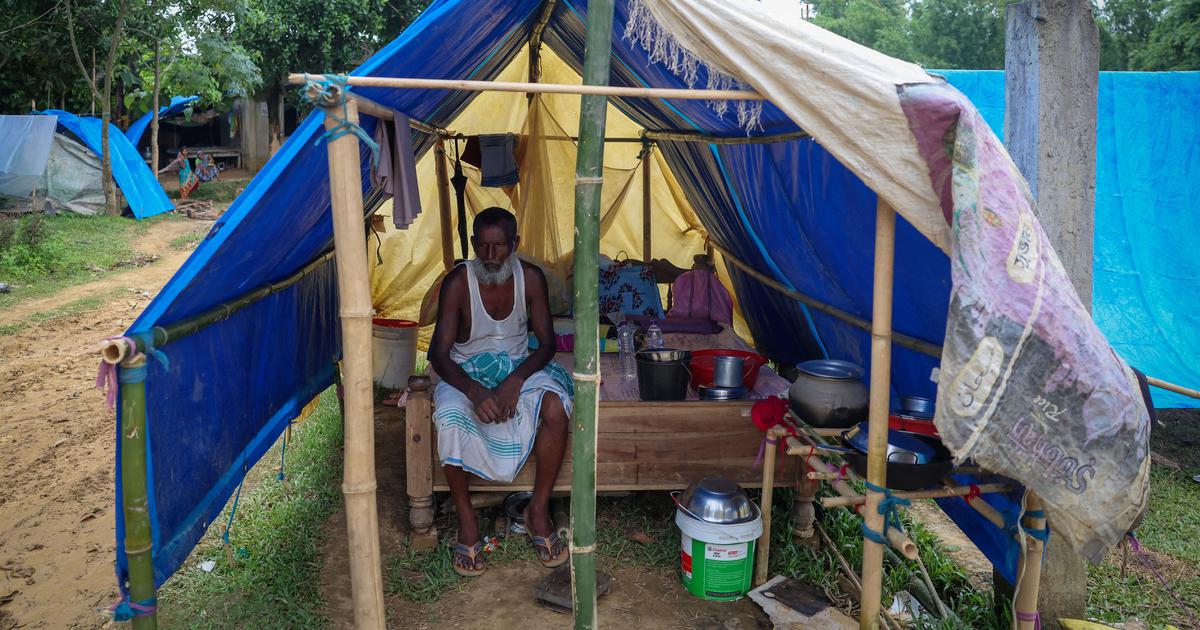
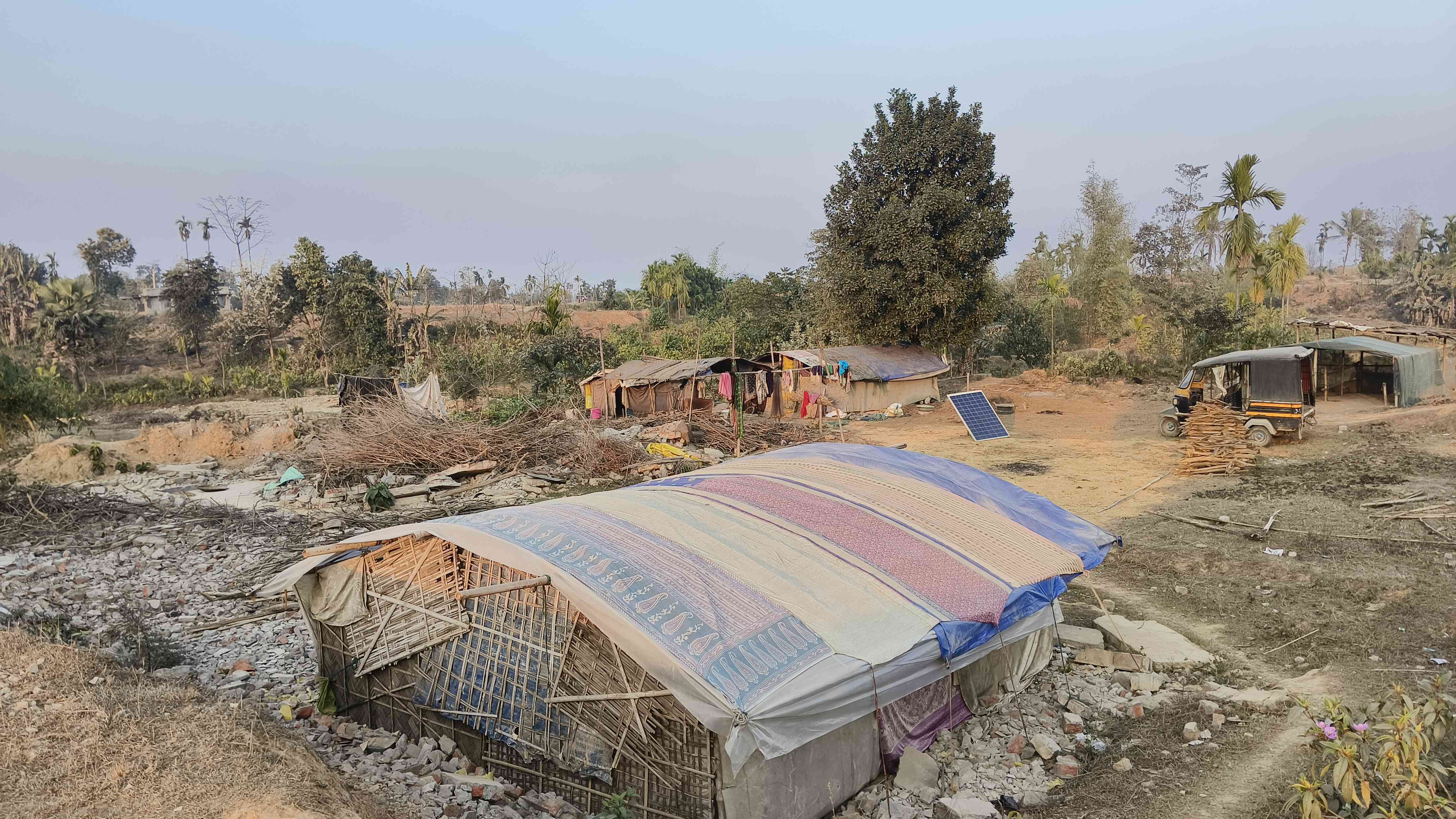
For the last seven months, Bodiat Jamal’s family has been living under a tarpaulin sheet in Assam’s Dhubri district – on the spot where their home once stood.
In July, the homes of 1,400 Muslim families of Bengali origin were razed by the Assam government to make way for a power project.
While several moved out of Chirakutha village, the 42-year-old mason and his family stayed on.
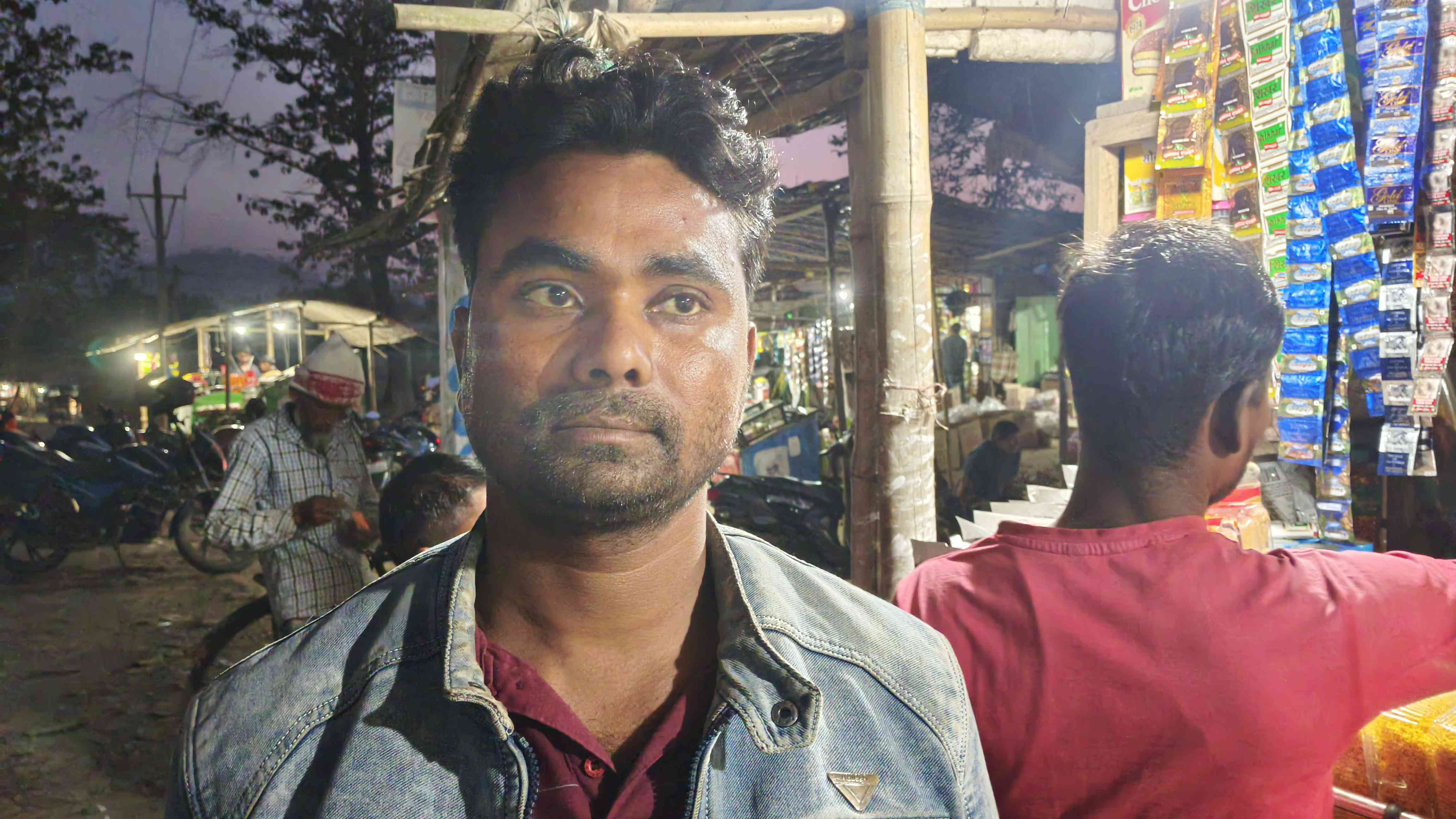
Last week, Jamal found that his name and that of nine members of his family had been struck off the final voter list prepared by the Election Commission after a special revision.
“We have been voting here for the last 24 years,” Jamal said. “This year I will not be able to vote.”
He is also worried about travelling to Upper Assam to work without a voter identity card.
“I work in Dibrugarh district. But I returned last month as soon as I got a message that an objection had been filed against my name in the voter list,” Jamal told Scroll. “Without a valid voter identity card, it is risky to work outside, especially in the current time.”
For months now, Assamese ethnonationalist groups in Upper Assam have been intimidating Bengali-origin Muslim workers, and asking them to leave. “I can't go to work again if my voter card is not restored,” Jamal said.
He added: “Our homes were broken, land was taken away, and now even the voter card is gone.”
A spate of deletions
Jamal was not alone. In all, 221 Bengali-origin Muslim voters from Chirakutha Part I village were deleted from the final voter list.
Scroll’s enquiries in Dhubri and Uriamghat, another site at which thousands of Bengali-origin Muslim homes were demolished, reveal that 5,700-odd evicted persons might have lost their place on the electoral roll.
In Dhubri, around 756 voter names have struck off the roll in four polling stations, where people were evicted in July. Two booth level officers of the Bilasipara constituency told Scroll that 700-odd voters have been deleted as their permanent residence has changed because of the evictions. In Uriamghat, 4,945 voters from five polling stations in 19 villages where evictions took place have been deleted.
“In my ward, over 200 voters have been deleted because of the eviction,” the first booth level officer, who is a government official in Bilasipara constituency, told Scroll.
The displaced voters said their attempts to get back on the electoral roll were being frustrated by election officials.
Jamal said he had questioned the booth level officer about why a Form 7 application – an objection by another voter of the constituency – had been filed against him and his family members, when they had not left the village.
“The BLO had no answer,” Jamal said. “He instead asked me to apply for inclusion as a voter in the nearby Birsingh Jarua constituency.”
Jamal did so, but those applications too were not accepted yet.
On January 25, five Opposition parties wrote a memorandum to Assam’s Chief Electoral Officer, pointing out the fact that genuine voters who have been displaced by evictions were not being included in the electoral roll. “Such voters are neither allowed to submit online nor allowed to submit offline applications only with a view to oust them from the final electoral rolls,” it said.
In the last five years, around 50,000 people, mostly Muslims of Bengali origin, have been evicted from government land by the Himanta Biswa Sarma government. In August, Sarma had declared that those evicted from government land would be deleted from the voter lists of the place.
A self-complaint
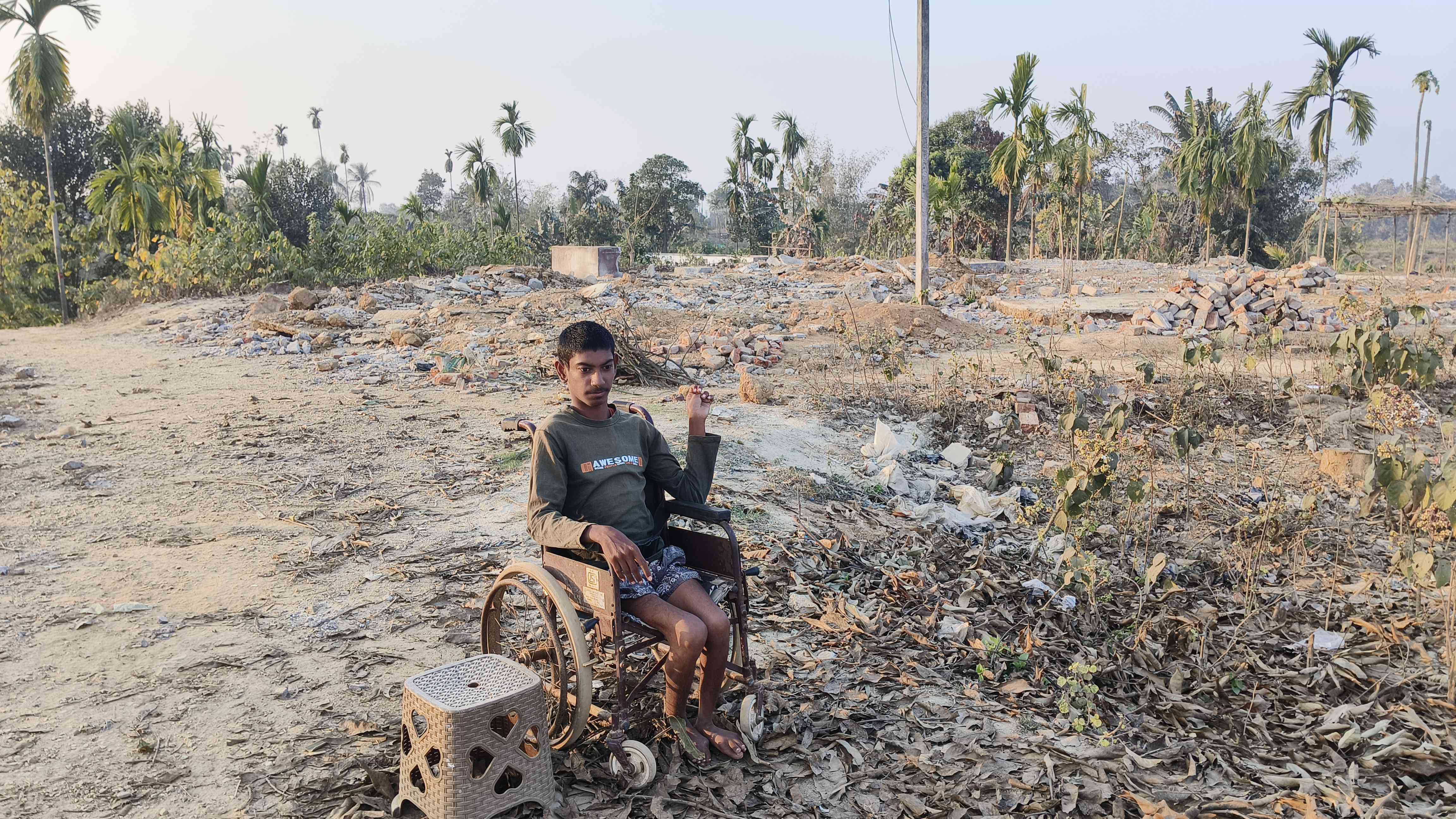
When Habej Ali’s home in Chirakutha village was demolished last July, he packed up his belongings and moved to another village 2 km away.
But anticipating that his name on the voter roll might be affected, the 27-year-old fish trader filed an application to the local booth level officer in Chirakutha, through Form 8, informing about his move to Charuabakhra Jangal Block village. Both villages fall in the Bilasipara Assembly constituency.
On January 21, Ali got a notice, informing him that a Form 7 application had been filed against him and his family members, seeking that their names be deleted from the electoral roll.
Any person in a constituency can use the form to file an objection against a voter.
“I got a notice that my name will be deleted and I was summoned for a hearing,” he said.
When he appeared at the Chapar circle office, Ali said that he “got to know” that the Form 7 application against him bore his signature. “But I did not file any objection,” he said. “I don’t know who filed it.”
When he pointed out that he had filed a Form 8, informing them about his relocation, election officials said that it had been “rejected”.
They asked him to enrol as a new voter at the nearby Birsingh Jarua constituency. “ “But my voter ID card will change if I apply through Form 6,”Ali said. “I am already a voter. Why should I fill in Form 6? I don’t have land there. I have land and have been staying at Bilasipara constituency.”
One booth level officer, who declined to be identified, told Scroll that there were “oral orders” that the evicted should only be enrolled at the Birsingh Jarua constituency.
"Many evicted people who applied for inclusion in Bilasipara constituency have been rejected,” said the second booth level officer. “Though they have valid documents for inclusion in Bilasipara, their forms have been rejected.”
Ali alleged a conspiracy to reduce Muslim votes in Bilasipara constituency, where Hindu and Muslim populations are nearly the same.
Mustafa Zaman Samim, a Congress leader from Dhubri, agreed. “The Muslim vote in Bilasipara is about 5,000 more than the Hindu votes, but with the summary revision and evictions, they want to make Bilasipara a Hindu majority seat so that Muslims can’t win,” he said.
EC clarification
In a press conference, Assam’s chief electoral officer Anurag Goel however, promised that there was no “suo motu” deletion of voters from the electoral rolls.
A separate procedure has been drawn up for evicted people, who have not been able to enrol themselves in their new addresses, he said.
“Because of evictions, some of the electors were removed from the rolls as ‘permanently shifted’ and their names from their previous polling stations or constituencies were deleted,” Goel said. “These people can submit a Form-6 before the Electoral Registration Officer for inclusion of his/her name in the electoral roll any time during summary revision or continuous updation of electoral roll, that is till the last date of nomination.”
But in Dhubri and Uriamghat, several displaced people complained that their names are not being included in the electoral roll.
For months now, Hobibur Rahman, a 35-year-old, has been going from one office in Golaghat district to another office in Nagaon district to get his name on the voter lists.
Rahman lived in Uriamghat till August last year, when the Assam government cleared more than 4,300 structures that had allegedly been built on forest land, leaving around 2,200 families homeless at Uriamghat in Golaghat district.
But after the summary revision, 1,445 voters at the Lakhijyoti LP School polling station of Uriamghat were struck off the roll. Most of them were Muslims, like Rahman.
Rahman moved to Nagaon district after the eviction.
“We tried to shift or transfer the vote from Uriamghat to Nagaon district to enroll our names in the voter list,” he said. “However, we got to know that someone had filed objections against my name in Uriamghat. This was not just against me. Such objections were filed against all the Muslim residents who lost their homes in the evictions.”
In Nagaon, too, he said booth level officers refused to accept his Form 6 application, asking to be enrolled as a new voter.
The result: Rahman found that his name and his family member names were marked deleted in the electoral roll published after the special revision.
